How to get started with Facebook advertising



- How to get started with Facebook advertising
- 2025 - the year that was
- 2024 - the year that was
- 2023 - the year that passed
- Set realistic requirements for yourself and the web agency when you need a new website
- Coffee meeting with Kasper Knudsen (Meta, AI & Mentor Programme)
- 2022 - the year that passed
- 2021 - the year that passed
- How do you choose an unemployment insurance fund as self-employed?
- 5 industries that can benefit most from using SEO strategies today
- What media is good for marketing?
- All posts
Facebook advertising: The ultimate guide.
Facebook is perhaps the most advanced advertising tool in the world. It's also the world's largest social media platform in terms of users. Among these users, you have the opportunity to target very specific people based on demographics, interests, behaviour and more.
Many companies today have a large part of their marketing budget allocated to Facebook. It's a platform that makes it easy for you to start driving traffic to your website. But there are some basic things you need to know if you want to advertise effectively.
Set up tracking on your website
One mistake many people make is to start advertising without setting up Facebook's tracking code, a so-called Facebook pixel, on their website.
Facebook pixel is just a small piece of code that is implemented on the website, allowing Facebook to see which people are visiting your website. This gives the ad tool a much better chance of finding the right people in your target audience.
So by setting up your Facebook pixel, you create the conditions for getting much more out of your advertising dollars.
Know your objective and ad type
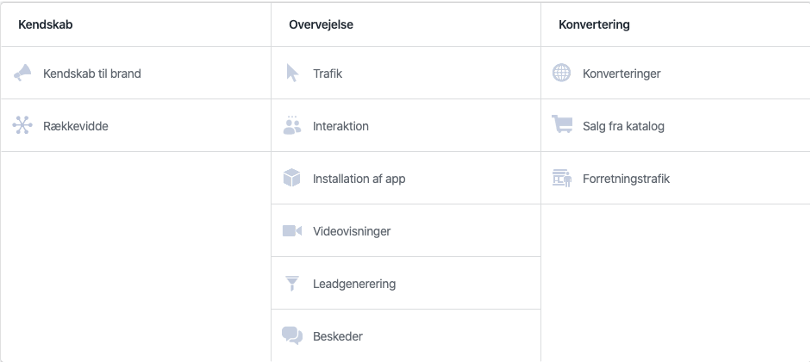
When setting up a campaign in Facebook, the first step is to choose an objective. The objective can be brand awareness, video views, leads, conversions or one of the 7 objectives shown below. For example, if you choose video views, Facebook will find the people in your target audience who are most likely to watch a video when they are on Facebook.
It's important that this is chosen wisely as it needs to define your actual goals to give you the right advertising opportunities and target the right people in your audience.
There are several ad formats and I often find that people assume that one is better than the others. Having spent millions of dollars learning the ropes on Facebook, I would recommend that you don't pre-select an ad format based on appearance.
Make sure to test multiple ad formats and always base your decisions on the results.
Target your advertising to potential customers
If you don't target your adverts to people who might be interested in your product, you can make a pretty good advert with no results. Targeting your advert to people who could potentially be interested in it is key.
Facebook is not only the social media with the most users, but also the social media with the most information about its customers. This gives you some great opportunities to segment down to the finest detail. However, in my experience, in most cases, segmenting the target audience very specifically does not necessarily give the best return. It can be too specific, which means that the audience size becomes too small and the platform's effective targeting tool becomes too limited.
Also consider whether you should create adverts tailored to specific target groups. For example, you may want to create different adverts based on whether they are shown to men or women.
Re-targeting - The lowest hanging fruit
If you already have a lot of traffic on your website, the lowest hanging fruit is often to target people who have already visited your website, so-called re-targeting.
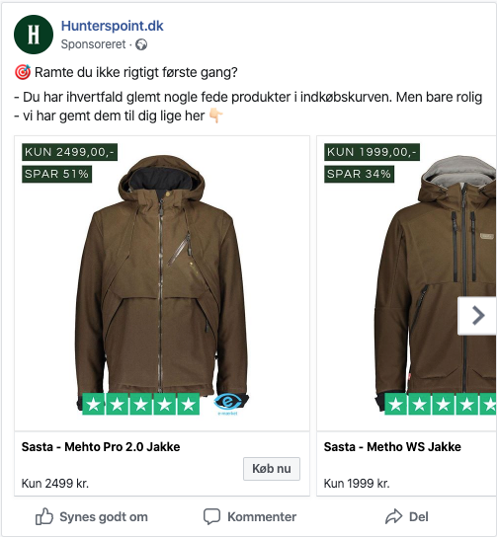
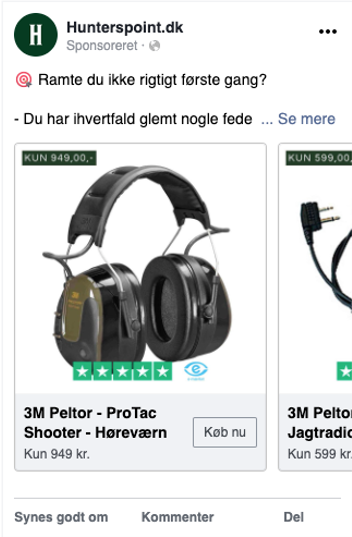
Here you can utilise the option to insert dynamic products in your ads. This means that you can show products in your adverts based on what users have looked at when they visited your website.